Sunday, July 30, 2006

Take Me Home: The Church in the Hills

A few days ago my mom and I drove up a narrow country road to the place where my great-great-grandparents, the Burgesses, once lived. The wild woods have overtaken where their family home stood. Born in 1857, my great-great-grandfather came to Grapevine Creek from Missouri with his mother and brother after a family tragedy during the Civil War. As an adult, he served for more than forty years as a horse-riding Methodist lay minister in the mountains. He's now buried in a small hill-top cemetery not far from my home.

On the way to see where my ancestors lived we passed a little white country church called Grapevine Chapel. My Mom grew up in that church. She served there as the vice-president of the youth group and sung in the Grapevine Octet. Since I grew up next door to my grandparents, my mom's parents, I went to Grapevine Chapel with my grandmother on occasion. She drove us up Grapevine Creek, about a mile past where we lived, in her red '69 Ford Falcon. It was a brief but scenic drive, nice on a Sunday morning. The white wooden church with a cross-topped steeple sat beside the road in a grassy field. The structure had been built a few miles away in the 1800's as a Methodist Church, but was moved to its present location on Grapevine Creek around 1929, where it became the independent community church it is today. Through the door we entered into the pine interior and walked on the hardwood floors to my grandma's usual place among the solid pews. She sat down on her inch-thick square cushion and I rested beside her.

At the beginning of the service we stood and sang the old hymns from well-worn hymnals. We sang attentively, with feeling. I don't know exactly how to explain the way Appalachian people sing in their churches. Try to image a room full of men and women with thick Appalachian accents singing "Amazing Grace" unhurriedly, deliberately, almost mournfully, with a sense of reverence, remembrance, and hopeful yearning. The rich harmonies underlie the moving melodies. They skillfully bend the notes with their mountain dialect. Perhaps this is the Scots-Irish version of the blues. As they sing, the words sometimes make grown men cry. A lot of our culture's music is about going to heaven. Appalachian people embrace the reality of suffering and death, but also look forward with hope to a time when there's no more of pain and sorrow.

As the singing is enthusiastic, so also is the sermon. A good preacher, according to conventional wisdom, is one who knows the Bible and can get everybody, including himself, excited about it's message. It might be said of a calm, uninspiring preacher with little theatrical ability, "He's a good teacher, but he's just not a preacher." Preachers don't have to be formally educated and a lot of churches specifically want preachers that aren't. "A seminary can ruin a preacher," some say. For these people, the only school book a preacher needs is his Bible and the only teacher is the Holy Spirit.

Members of these churches rightly believe that the Bible is the authoritative word of God. They sincerely want to believe and live out the "old time religion," the true Christian Faith revealed in the Bible, the same Faith of the early Church found in the Book of Acts, the same Faith preached by Peter and Paul. As the old song goes:

Give me that old time religion.
It's good enough for me.

It was good enough for Paul and Silas.
It's good enough for me.

The Appalachian people try to stick to the Bible and keep the old time religion of the Apostles alive as much as they know how. Despite their best efforts, though, these churches lack something the early biblical churches that are mentioned in the Bible possessed. What are country churches missing that the early churches had? Let's take the ancient church in Antioch for example. What can the ancient church of Antioch teach the country churches in the Appalachian hills?

Jesus Christ, the Son of God, founded His Holy Church upon the Apostles He had chosen. After the Crucifixion, Resurrection, and Ascension of Christ, the Holy Spirit descended upon the Church on the Feast of Pentecost. The Spirit empowered her to do the work of Christ on the earth and to take the Gospel throughout the world.

According to the Book of Acts, when the church in Jerusalem heard that people in Antioch were receiving the Gospel and believing in Jesus, the Jerusalem church sent Barnabas to Antioch. When Barnabas saw what was happening there, he traveled to Tarsus to bring Paul back with him. Paul and Barnabas spent a whole year with the Antiochian church and taught a large group of people about the Faith. (The disciples of Jesus were first called Christians in Antioch.) At the right time, according to the will of God, Paul and Barnabas were sent off from Antioch on their world-changing missionary journeys.

What happened to the church in Antioch after the age of the Apostles? The Apostles entrusted the leadership of the Church, indwelled and guided by the Holy Spirit, to their successors. From generation to generation the bishops of the Christian Church who proceeded the Apostles shepherded the faithful. One the most famous pastors of the church in Antioch is Ignatius, the second bishop of Antioch, who lived during the time of the Apostles and knew the Apostle John. Ignatius served the church in Antioch until, refusing to deny Jesus Christ, he was taken to Rome, thrown to wild animals, and martyred for the Faith.

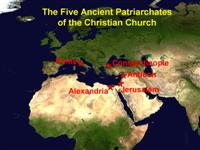
Eventually, the church in Antioch became one of the world's five major centers of Christianity, called patriarchates. The Patriarchate of Antioch, shared responsibility with the Patriarchates of Jerusalem, Constantinople, Rome, and Alexandria to shepherd the world's Christians.

What happened to the Patriarchate of Antioch? After 2,000 years, the Patriarchate of Antioch is still alive and thriving. In fact, all of the Patriarchates are still part of the Church, except for the church in Rome. The church in Rome, under the leadership of its bishop (the Pope) failed to hold on to the Faith and went its own way about a thousand years ago, forming what is called the Roman Catholic Church. With Rome gone, the Church revealed in the pages of the Holy Bible became known as the Orthodox Christian Church. (Orthodox means right faith and right worship, or right glory.)

The Patriarchate of Antioch is even present in our country. When Christians of the Patriarchate of Antioch emigrated from their native lands of Lebanon and Syria to America they brought the ancient Christian Faith with them to the shores of America and established churches throughout the land. People may be surprised to learn that several churches in Appalachia are still part of the Patriarchate of Antioch. St. George Antiochian Orthodox Cathedral in Charleston, West Virginia, is the seat of His Grace, Bishop THOMAS, who was consecrated as bishop in Damascus, Syria, in 2004. (The cathedral is named after St. George, an early Christian martyr.) With Bishop THOMAS as our shepherd, the cathedral is the spiritual center of Orthodox Christianity in West Virginia.

Although the Church founded by the Apostles in biblical times still exists, most people in America don't realize that the ancient Church is still around. Here's why: Since the United Sates has been dominated throughout history by Roman Catholicism and the many Protestant groups (Baptist, Methodist, Pentecostal, independent, etc.), relatively few Americans have had any contact with the Orthodox Christian Faith. That's changing thanks to Orthodox Christian missionaries and immigrants who have come to America from the lands of the Bible. We are in a very special point in history when people are discovering the ancient Church and coming home to her. In some cases, entire congregations have united themselves with the Church. Some pastors who had dedicated their lives to bringing sinners to the foot of the Cross in repentance now not only bring men and women to the Cross of Jesus Christ, but they bring them through the Life-Giving Cross into Christ's Holy Church. The Patriarchate of Antioch, with a missionary legacy that dates back to Paul and Barnabas, has been instrumental in bringing the message of the Orthodox Church to North America and welcoming home those who seek to be united with the very Church that we read about in the pages of the Bible. His Eminence, Metropolitan PHILIP, who shepherds all the Antiochian Orthodox churches in North America, has offered this invitation: "Come home, America! Come home to the Faith of Peter and Paul!"

The Orthodox Christian Faith is the fulfillment of Appalachian religion. First, there was only the Orthodox Church, then the church in Rome broke away to form the Roman Catholic Church. Later, the Protestant movement broke away from the Roman Catholic Church. All kinds of different churches emerged out of Protestantism, including the countless denominations, associations, and independent churches in Appalachia. Now with the presence of the Orthodox Christian Church in America, Appalachian churches have the opportunity to return back to the Church of the Apostles and to discover the spiritual depths of the true Faith they have never fully known.
What would happen if Grapevine Chapel became an Orthodox Christian temple? I can imagine returning there to see a spiritual community with renewed faith, life, and vision. Walking through the doors on Sunday morning I enter the atrium and light a candle as a sign of my prayer before an image of our Lord and Savior, Jesus Christ. Asking for the forgiveness of sins, I calm my senses, leave all my worldly cares behind, and prepare my heart for heavenly worship. Then, I enter the main part of the church and stand at one of the pews. Although the central worship service, called the Divine Liturgy, hasn't begun yet, the service of morning prayer is already going on. I hear the familiar prayers sung in ancient tones and smell the sweet incense, mingled with the prayers of the saints, as the smoke rises up to God. Our worship reflects the heavenly worship revealed in the Book of Revelation. It's beautiful. The service is led by a man who has been called by God and ordained by the Church as a link in a chain of ministers that extends through history all the way back to the Apostles. Our worship is liturgical, meaning that it is the work of the people. There are no instruments to be heard except the human voice as the people sing prayers and spiritual songs, some of them over a thousand years old. We didn't just come here to listen to a sermon, but to worship God together with all our hearts. When the morning prayers conclude, the Divine Liturgy begins. The little church is full of mystery. The worship I see reminds me of the reality I can't physically see with my eyes, but that I know is present all around me. We are not alone in our worship. God is with us and we who worship the Holy Trinity on earth are joined by the saints, angels, archangels, cherubim, and seraphim in heaven. This is heavenly worship, the way worship in the hills should be. This is Orthodox Christian worship, ancient worship, timeless worship, the worship of the true and living God.

For generations the churches scattered throughout Appalachia have tried to live a spiritual life of faith and hope based on the Bible. They've tried to trust in God and live the old time religion. It turns out that the old time religion of mountain churches isn't as old as we thought. (The Bible itself can be dated to the time of the Apostles, but the way most mountain churches use and interpret the Bible is no more than 500 years old. Some of the interpretations, assumed to be ancient, are much newer.) For years the people of Appalachia have been missing something. They've tried to be a church the best way they know how while being separated from the Orthodox Christian Church, the historical New Testament Church that has continued to live the fullness of the Christian Faith in the lands of the Bible and beyond. The people in the hills have tried to study the Bible passed down to them without the benefit of the interpretation that has been passed down along with the Bible in the Orthodox Church. They've tried to worship God with all their hearts without having the opportunity to experience the true, ancient, heavenly worship of the Orthodox Church. I'm happy to know that the Orthodox Christian Church has come to the Appalachian hills, the land of my ancestors, with arms open wide to welcome us home. Come home to the Faith of the Apostles, the Faith of the Fathers, the Faith of the Orthodox, the Faith that has established the universe.


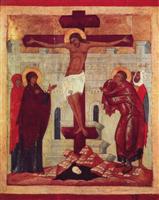
Images: Photo of Grapevine Chapel in 1959 (from family collection); Photo of St. George Orthodox Church by Dana S. Kees; Russian Orthodox icon of the Crucifixion (Public Domain); Image of what Grapevine Chapel might look like today as an Orthodox Church (original and enhanced photos by Dana S. Kees. The dome actually belongs on top of the Orthodox Church of St. Mary Magdalene, which rests on the Mount of Olives in Jerusalem, from image in the Pictorial Dictionary of Bible Lands, Bibleplaces.com. Used by permission).

Copyright © 2006 by Dana S. Kees.

Monday, July 24, 2006

In the Mountains

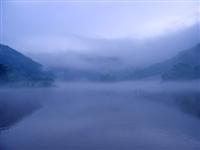
I recently visited the lake for a few days. Near sunrise and dusk, I watched the cloudy-white mist glide slowly across the water between the mountains.

I love the Appalachian mountains, where my roots grow deep. I live inside an ever-changing icon. Every green thing, every leaf and blade of grass, points me to God, who created all things and dwells among us.

I often find myself looking at a scene or driving down a country road and thinking, "This would be a wonderful place for a monastery." In the hills we find silence, touched by the sound of birds and breeze. The blue sky arches above the earth's browns, greens, and yellows. Red, orange, and purple flowers are scattered about. Each piece seems to rest in the right place. God is here. This is a good place for prayer. It’s a good place to work and encounter the wonders of life.

Monks are friends of both the Creator and the creation. I've heard of monks like St. Seraphim of Sarov who, through the Holy Spirit, became so gentle, loving, and peaceful that the wild animals in the forest befriended them. Although the world has fallen into chaos, these prayerful saints lived harmoniously with the animals as though it were still Paradise.

A monastery here would be good for the monks who strive to pray without ceasing, shed themselves of their own prideful self-centeredness, achieve divine enlightenment, and experience theosis, union with God.

A monastery would also be good for the people in both the surrounding country and in the nearest city. It seems to me that one reason people in my generation are so apathetic about their own spiritual health is that they're so busy with distractions, disconnected from places of peaceful rest, and immersed in the quicksand of secular culture. Young Americans are enslaved to a harmful worldview, reinforced by friends, the media, and the culture.

A monastery in the mountains would offer people a place of refuge, somewhere to run to, away from an environment that nurtures pride, self-centeredness, chaos, and confusion. People need a quiet place, a holy place, where they can reorient themselves, reconnect with their souls, look honestly at their own hearts, and allow their ever-loving Creator God to reach deep within them to heal their hurts. They need to disconnect themselves from a world full of ignorance and misguided ideas so they can seek, find, and be changed by the Truth who sets us free. A monastery in these very hills would provide us with a place of constant prayer for the benefit of our nation and the whole world, a world that needs guidance, divine help, and peace.

Yes, this would be a wonderful place for a monastery.

Let us pray to the Lord. Lord, have mercy.


Copyright © 2006 by Dana S. Kees. Photograph copyright © 2006 by Dana S. Kees.
Friday, July 21, 2006

Orthodox Christianity in Serbia

Although Serbia has endured much suffering under the weight of oppressive atheist regimes, the Orthodox Christian Church in Serbia has continued to weather the many violent storms that have blown through its land. The light of Christ has continued to shine brightly through His Church during many years of political upheaval and brutal war.

The Serbian Orthodox Patriarchate, like the Russian Orthodox Patriarchate, is a modern jurisdiction of the Orthodox Christian Church united with the ancient Patriarchates of Constantinople, Alexandria, Antioch, and Jerusalem.

The ancient Decani Monastery is a Serbian Orthodox Christian monastery in Kosovo. They have a great website. In the Orthodox Church we express our Faith and pray our prayers through our music. Hear the glorious prayers chanted by the monks. See the images of the night vigil and the monastery in festal lights. The monastery is filled with beautiful holy icons. Read about The Art of Decani Monastery. See images of the monks celebrating Easter (Pascha) in 2003. Check out the other pictures of the monks worshiping inside the church temple, the church building from the outside, everyday duties of the monks, and the icon studio.

Here are pictures of the monastery after the war. Watch a really good BBC report (Real Video) about how the monks saved lives in Kosovo. You can also read news articles from the the BBC, the Associated Press, The New York Times, and Knight Ridder Newspapers about the monks' life-saving work among the people.

In addition to the prayerful chants available on the Decani Monastery website, hear Serbian Orthodox Choral Chants and Medieval Chants on the website of St. Luke's Orthodox Mission.

The Serbian government under Slobodan Milosevic tried to use the image of the Orthodox Church for the purposes of nationalistic political propaganda. Listen to an NPR report by Frederica Mathewes-Green about the role of the Orthodox Christian Church in Serbia during this period. The Very Reverend Thomas Hopko wrote an article entitled, "The Serbian Church and Milosevic," which is available on the websites of St. Vladimir's Orthodox Theological Seminary and OrthodoxyToday. The Serbian Orthodox Church's actual view of Milosevic's regime can be seen in reports by the BBC, CNN, and Christianity Today. The Rev. Irinej Dobrijevic wrote a paper on "The Role of the Serbian Orthodox Church in National Self-Determination and Regional Integration," published on serbianstudies.org (pdf file).

The Cybercast News Service has made available an article and video showing the desecration of an Orthodox Christian Church in Bosnia by Islamic forces. The article is entitled "Church Desecration Video Serves as Jihad Fund-Raiser." On a more positive note, Frank Brown wrote "Orthodox Serb Priest Aids Embattled Serb Villagers in Kosovo," available on Beliefnet.com.

For information on the Serbian Orthodox Church in America check out the websites of the Serbian Orthodox Church in the United States and Canada and the Serbian Orthodox Church, Diocese of Western America.

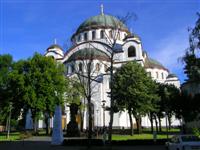
Copyright © 2006 by Dana S. Kees. The public domain photo of the Temple of Saint Sava in Belgrade, Serbia by Filip Maljkovic is available at Wikipedia.com.

Wednesday, July 19, 2006

Finding Your Spiritual Home

While many of us would identify ourselves as "spiritual," a lot of young Americans are highly suspicious of “the Church."

When some people think of the Church they think of the Roman Catholic Church, viewed as an institutional behemoth headed by an infallible Pope that once controlled most of the Western world. When someone’s concept of the Church is based on the Roman Catholic Church, the person may see the Church as an entity that will compromise holiness for political gain and that blurs the line between politics and religion. Isn’t the Church responsible for the brutal death and destruction caused by the Crusades and the Inquisition? Hasn’t the Church used religion as an excuse to invade countries and control people’s personal lives? The Church is deceptively dangerous, some think. Even today the Pope is the leader of the Holy See, a separate country within Italy that maintains incredible wealth and political power. Who knows what dark secrets are kept within the halls of the Vatican? Hasn’t the Church suppressed certain writings and even executed people who could call into question its official doctrine and absolute authority?

Not all Americans use the Roman Catholic Church as their model for understanding what the Church is. Protestants who belong to the multitude of denominations and independent churches don’t see the Church as a visible institution, but as an invisible entity made up of all the real Christians in the world. Protestants view the different local churches and denominational organizations in the world as separate from the Church. Ideally, the Protestant religious organizations are supposed to help the Church grow and do its work in the world. One might hear a Protestant say, "All the differences between the denominations don't matter. What matters is the Church of Jesus Christ. We need to get beyond our denominational differences and find unity in the Church."

Secular people who reject the Church because they think it’s like the Roman Catholic Church and Protestants who embrace their concept of the Church as just an invisible interdenominational entity both misunderstand what the Church really is. If the Church is neither like the Roman Catholic Church with its infallible Pope and Vatican City nor is it merely made up of the sum total of all those who believe in Jesus Christ, according what Truth they have received, then what is the true Church?

Almost 2000 years ago, Jesus Christ founded the Church. There was only one Church, the Church. More importantly it was His Church, which He built upon His Apostles. After Christ’s death, resurrection, and ascension into heaven, the Holy Spirit descended upon the Church to indwell it. The Church became the temple of the Holy Spirit and, guided by the Spirit, served as the “pillar and ground of truth” on the earth. In the early days, the Church produced the New Testament and its missionaries took the Faith throughout the Roman world. The Church continued to grow, even under severe persecution, as people believed in Jesus Christ and were received into the Church by baptism.

When strange ideas surfaced within the Church, the Church held councils to defend the Christian Faith as it had been passed down and preserved since the time of the Apostles. The bishops didn’t gather together to decide what the Church would believe, but to declare with one united voice what the Church of Jesus Christ had always believed. They defended the Faith that is Catholic, that is, what had been believed by all Christians in all times and in every place. They defended the Faith that is Orthodox, the right way of believing and worshiping the true and living God. The Church of Jesus Christ also called itself The One Holy Catholic and Apostolic Church and the Orthodox Church.

The decisions of the councils clearly defined what the Church believed. Those who introduced strange new heretical doctrines contrary to the ancient Faith of the Orthodox Church were called upon by the Church to repent of their heresies and reaffirm the true Faith. The prideful heretics who continued to trust in their own invented doctrines instead of the ancient Faith separated themselves by their actions from the Orthodox Church, the body of Christ on earth. The heretics’ churches continued to exist, but anyone who united himself or herself with one of these churches was considered to be out of communion with the One Holy Catholic and Apostolic Church established by Christ.

One of the saddest events in the history of the Church took place about 1,000 years ago. During the Great Schism the churches in the West under the influence of Rome separated from the churches in the East. The Western churches formed the Roman Catholic Church while the churches in the East, including the ancient churches of Jerusalem and Antioch, remained a part of the Orthodox Church.

The Roman Catholic Church continued to drift away from the Faith preserved through the centuries by the Orthodox Church. About 500 years ago, realizing that the Roman Catholic Church had departed from the Faith of the Apostles, several Roman Catholics started the Protestant movement. The Protestant movement has produced thousands of religious groups, including Baptists, Episcopalians, Pentecostals, Methodists, Presbyterians, and a host of other denominations, parachurch groups, and independent congregations. Unfortunately, instead of returning to the Orthodox Church founded by Jesus Christ, Protestants formed their own churches apart from the Church. (Most Protestants don’t even realize that the ancient Church of the New Testament still exists.)

Like many other Evangelical Protestant pastors before me, I once tried to create a “New Testament” church patterned after what I read in the Bible, especially in the Acts of the Apostles. Since the early Church met in homes, I tried to introduce home-based worship into the life of my congregation. Since fellowship and prayer was part of the early Church, I attempted to ensure both of those things were included. I tried to recreate the biblical Church in 21st century America. I failed. I was destined to fail. I didn’t know at the time that a person can’t follow a biblical pattern to create the biblical Church. The Bible doesn’t make a church. Instead, the Church, through the Holy Spirit, produced the Bible. It was written for the Church and can only be understood by the Church within the life of the Church.

Even if I had successfully created a "church" that looked like what I thought the Church written about in the New Testament looked like, the "church" I created would still have been outside of the real Orthodox Church. Eventually, I realized that the only way I could be part of the true biblical New Testament Church was to unite myself to the One Holy Catholic and Apostolic Church, the Orthodox Church founded by Jesus Christ Himself. As Patriarch Ignatius IV, the current pastor of the ancient Patriarchate of Antioch has said, "We did not invent Orthodoxy. Churches cannot be invented. Nobody can make a Church, and Christ is the only one who spoke about His own Church. And we believe that we stick to Orthodoxy because it is His own Church" (The Ancient Church).

The Orthodox Church does not have a Pope. Our bishops share a brotherly equality. Unlike in the Western world, where the Pope often ruled over both Church and State (after the political collapse of Western Europe), the Orthodox Church believes that bishops and rulers should have a complimentary relationship. The Church deals with the affairs of the heavenly reality of the kingdom of God. The State deals with the governmental issues on earth. The Orthodox Church is not just an institution, but a dynamic community with an organic organization, a family with a hierarchy. (The word church, meaning assembly, refers to the mystical community itself. The people are the Church.) The Crusades and the Inquisition were Roman Catholic pursuits. They were not carried out by the Orthodox Church. (Orthodox Christians were actually victims of the Crusades. In 1204 the Crusaders sacked the Orthodox city of Constantinople, which eventually fell during the Islamic invasion. Pope John Paul II has offered an emotional apology for the atrocities committed by Roman Catholics against Orthodox Christians.) So, those who think of the Church as being like the Roman Catholic Church misunderstand what the Church is really like.

The Orthodox Church is both mystically invisible and visibly present in the world. The One Holy Catholic and Apostolic Church has preserved a lifestyle that has been lived for thousands of years. A person can walk into an Orthodox Church and experience with all five senses a 1,600 year old worship service that still maintains the traces of the Jewish worship familiar to the earliest disciples of Jesus. Our prayers, icons, songs, preaching, and way of life find its root in apostolic times. Our bishops, entrusted with protecting the apostolic faith in the churches under their care, trace their historical line of authority all the way back to the Apostles, the first bishops of the Christian Church. As our Faith has endured through the generations so has our organizational structure. The Orthodox Church is the mystical body of Christ. All members of the Church, both on earth and in heaven, are invisibly joined together as the Church. At the same time, however, the Church is also visibly united by our worship, structure, and spiritual lifestyle.

Although it's the second largest Christian body in the world, the Orthodox Church has remained relatively unknown in America, which has historically been under the influence or Roman Catholicism and Protestantism. Even though I have two degrees in the field of religion, I learned almost nothing about the Orthodox Church during my formal studies. When we talked about the Orthodox Church in school, our teachers and books simply called it the early Church, so I didn’t realize the early Church still existed. During my time in an Evangelical Protestant seminary, I took a theology class that used a book called, A Handbook of Contemporary Theology, which surveyed various kinds of theological perspectives. The chapter on “Eastern Orthodox Theology” began with these words:

If any church has a legitimate claim to stand in historical succession from the apostolic church of New Testament times, it is the Eastern Orthodox. Known also as the Greek Orthodox Church and the Greek Orthodox Catholic Church, the Eastern Orthodox tradition may be said to be the mother of both Roman Catholicism and
Protestantism. And yet, this oldest tradition in which originated a huge portion of our theology is little known or understood. (103)

I didn’t pay much attention to that chapter during my time in seminary, but now I know what it means. Thankfully, I’ve met many Americans like me who have discovered the fullness of the Christian Faith in the Orthodox Church.

We hope that those who have rejected the Church, however they misunderstand it, will find their spiritual home in the ancient Orthodox Church, a community of truth, faith, and mystery. We also hope that all Christians who live apart from the Orthodox Church will come home to the Church where the fullness of the Christian Faith is found. We don’t believe that unity among Christians can be achieved by superficially agreeing on a few essential doctrinal principles, however important they may be, while ignoring the doctrines that divide us. We believe that the real union of Christians can only be achieved when we are all united together as one body in Christ’s own Church, where we stand together in the same Faith and experience the same spiritual life in its fullest and most complete expression.

Since there is only one Church and one Faith, we must all be united in the same Church that holds to the same Faith. We can only find true union within the same flock of the same Shepherd. Let us all gather around the living Christ within His Church, the community of His beloved disciples. This is the ancient Church, the Church we all need, the Church many of us have always hoped for but never knew existed.

Copyright © 2006 by Dana S. Kees. Photo copyright © 2006 by Dana S. Kees. (Work Cited: A Handbook of Contemporary Theology by David L. Smith, “Eastern Orthodox Theology,” (Wheaton: Bridgepoint, 1992), 103. The quote from Patriarch Ignatius IV is part of an interview in The Ancient Church, a movie directed by Richard Zakka and produced by Silverline Films.)
Monday, July 17, 2006

For the Peace of the World

Around the world we see conflict among the nations and between different factions in country fighting for political power. Lust for power and ignorance of Truth drive men and women to commit acts of evil against their fellow humans. The secular philosophies and false religions of those who do not know the true and living God spread destruction. Many are deceived, thinking that they are doing good when they do evil. Their hearts are full of hatred. They yearn for vengeance against their enemies when they do the same evil against their adversaries that they despise being visited upon themselves. Even those who do not fight actively sympathize with those who murder innocents because they want revenge. They blame their enemies and curse them without realizing that the forces they support are part of the same continuous cycle of savage retribution. Many gather together in the streets to cry out for retaliation. They even teach their children to hate, poisoning the pure hearts of little ones with their own self-destructive anger, prideful contempt, and disregard for the beauty of life.

The earth is full of violence. As Orthodox Christians we must stand for peace. May we condemn the cycle of brutality and call for all people to break the ever-spinning wheel with the strong hammer of forgiveness.

In the midst of war, let us pray for peace. In many of our services, we sing the Litany of Peace (or Great Litany), a prayer that begins with these words:


In peace let us pray to the Lord. Lord, have mercy.

For the peace from above, and for the salvation of our souls, let us pray to the Lord. Lord, have mercy.

For the peace of the whole world; for the good estate of the holy churches of God, and for the union of all men, let us pray to the Lord. Lord, have mercy.


As we pray for peace through the Litany when we are gathered together as the Church, let's also pray for peace during our private prayers.

Through our relationship with God we can acquire true peace in our hearts, nurture it, and humbly manifest it in our relationships with others. We are called to be agents of peace in the world around us. "Blessed are the peacemakers," Christ taught us, "for they will be called the children of God."

Peace destroys the dominion of violence and chaos in our own souls and in the world. It brings forgiveness and love for our enemies. One way we can bring peace into our chaotic cosmos is through prayer. Let's pray that the peace of God will descend upon us and the nations. Let's also pray that the Orthodox Christian Church will radiate divine peace throughout the world so people will love instead of hate, confess their own sins rather than accuse others, grant forgiveness instead of retribution, and seek to heal rather than hurt.

Prayers for peace and advice from the Saints on peacemaking are available at In Communion, the website of the Orthodox Peace Fellowship. The Paraklesis to the Most Holy Theotokos, to be prayed in times of distress, is available on the Greek Orthodox Archdiocese of Australia website.

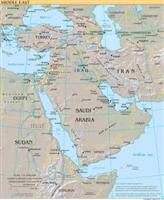
Since much violence has recently erupted in the Middle East, let us keep all Orthodox Christians in the ancient Patriarchates of Jerusalem and Antioch in our prayers, especially those in the Archdioceses of Tyre & Sidon, Beirut, Mount Lebanon, Gaza, Nazareth, and Tiberias and the Galilee, who find themselves in the midst of war.

Let's remember the words we pray when we gather in our local churches in the evenings for the service of Great Compline, singing "Lord, have mercy" after each petition:

Let us pray for the peace of the world, and for pious and Orthodox Christians, and for our Metropolitan PHILIP and our Bishop... and all our brotherhood in Christ, and for the civil authorities of this land, and for the welfare of our armed forces, and for our fathers and brethren absent from among us, and for those who hate us and those who love us, and for those who are kind to us and minister unto us, and for those who have requested our prayers unworthy though we be, and for the deliverance of captives, and for travelers by land and sea and air, and for those who lie in sickness, and let us pray also for the abundance of the fruits of the earth, and for the soul of every Orthodox Christian. Let us bless God-fearing leaders, Orthodox bishops, the founders of this holy church and our parents and teachers, and all our fathers and brethren gone before us, the Orthodox who here and everywhere lie asleep in the Lord. Let us also say for ourselves: Lord, have mercy. Lord, have mercy. Lord, have mercy.

Copyright © 2006 by Dana S. Kees. (The image is from the NASA library.)
Middle East News

In my previous post, Current News: Palestine & Israel, I listed several sources for news related to the Middle East. Let me add a few additional links. The Truth Laid Bear has set up a Crisis in the Middle East: Local Bloggers Report page with links to local Palestinian, Lebanese, and Israeli blogs, as well as other blogs covering the crisis. Also check out their link to Middle East Crisis: Israel, Hamas, Hezbollah. A brief description of Hamas, Hizballah (Hezbollah), and other Islamic militant groups is shown in the U.S. State Department's Background Information on Foreign Terrorist Organizations. The article, "Who are Hezbollah?" appears on BBC News: Middle East. The Hamas Charter is available for reading on the Palestine Center website.
For Lebanese perspectives, you can read The Daily Star, an English language newspaper online, and articles from the Lebanese Foundation for Peace.

Current news on Iran is available on the Iran News Blog. Also, check out Iran News Watch for updates.

Copyright © 2006 by Dana S. Kees. The CIA map is in the public domain.
Wednesday, July 12, 2006

Praying with the Chotki

One of the central prayers in the spiritual life of Orthodox Christians in a simple prayer known as the Jesus Prayer: “Lord Jesus Christ, Son of God, have mercy on me, a sinner.”

Shorter forms of the prayer like, “Lord Jesus Christ, have mercy on me” may also be prayed. The most important aspect of the prayer is the invocation of the Divine Name, Jesus.

In the spiritual classic, The Way of a Pilgrim, a captain in the Russian Army talks with a pilgrim about the Jesus Prayer:


“Which is more exalted,” asked the captain, “the Jesus Prayer or the Bible?”

“It’s all the same,” I replied, “for the Divine Name of Jesus Christ contains within itself all the biblical truths. The holy Fathers say that the Jesus Prayer is the abbreviated version of the entire Bible.”

A circular rope called a chotki by Russians and a comboschini by Greeks is composed of a series of knots used for counting the number of times one prays the Jesus Prayer. The prayer rope, as it is called in English, is a spiritual sword in our battle against the influence of sin and death. It is a tool to help us pray continually from the heart, keep a constant awareness of God, and maintain intimate communion with Him. The tiny piece of rope can help us reach the summit of our human potential and the heights of Paradise.

I found a small book entitled, Comboschini: Meditations of a Monk of the Holy Mountain of Athos, edited by the Church of Panagia Ahiropeetos in Thessaloniki, Greece in 2002. It’s short and simple, but offers a nice introduction to the use of the prayer rope and the Jesus Prayer. Thankfully, the text is available online at the Orthodox Christian Information Center. The article Saying the Jesus Prayer by Albert S. Rossi, a very good introduction to the Jesus Prayer, is available on the St. Vladimir's Orthodox Theological Seminary website.

Books about the Jesus Prayer include The Way of a Pilgrim and The Jesus Prayer by a Monk of the Eastern Church.


Copyright © 2006 by Dana S. Kees. Photo copyright © 2006 by Dana S. Kees. (The above quote was taken from The Way of a Pilgrim and The Pilgrim Continues His Way, trans. by Olga Savin. (Boston: Shambhala Classics, 2001), 22.)

Tuesday, July 11, 2006

The Secrets of Human Potential

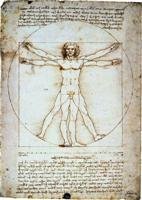
As I've previously written in my article on Orthodox Christian Anthropology, if we want to know ourselves and fulfill our human potential we must learn the divine knowledge that has been preserved in Holy Tradition. Here is a list of sources within Tradition that teach us who we are and who we can become.

Americans, educated in the Western world, tend to think that the way to learn something is to study the subject, read books about it, take classes, attend training seminars, or listen to expert speakers. According to this way of thinking, to become an expert on a subject, one has to research it, earn advanced degrees, and teach it at a university. (Having seen the experts that are consulted for documentaries related to religion, spirituality, the Bible, and Christian history that appear on television, I realize how loosely the media use the word "expert.")

A person can't learn Holy Tradition only by reading a book, listening to others talk about it, or trying to decipher the symbolic meaning of painted icons. Spirituality can't be learned in such a way, but must be learned through experience. Holy Tradition isn't merely a collection of writings or list of doctrines. It is the Faith of the Apostles in the mind of the Church. Holy Tradition is a way of life, "life in the Spirit," lived in harmonious unison with the whole Church worldwide. To gain spiritual knowledge and attain our full potential we must live the life of Faith with all our heart, mind, soul, and body within the mystical community Christ Himself established.

Through Holy Tradition as expressed, in part, by these sources, we can learn about who we were created to be as human beings, who we are now, why we are the way we are, and who we can become, fulfilling our human potential:


The Holy Scripture, not personally interpreted by an individual, but understood within the context of the Church in the light of Holy Tradition. Holy Tradition contains not only the written Scripture itself but also the interpretation of the biblical text that has been passed down to us through the centuries alongside the written text .


The Holy Icons

As the Holy Scripture reveals the Truth to us in written form, the icons visually show us the Truth in divine images.


The Services

The readings and music of the Church contain within them the teachings of the Church. In fact, the beautiful music itself is secondary to the words themselves that are conveyed with beauty. So much can be learned while standing in an Orthodox Christian temple during prayer and listening to the rich texts read or sung weekly during Vespers, Matins, and the Divine Liturgy. Furthermore, the teachings of Holy Tradition are revealed in our physical acts of worship.


The Church Fathers

1. On the Incarnation by St. Athanasius the Great, St. Vladimir's Seminary Press.

2. On the Human Condition by St. Basil the Great, St. Vladimir's Seminary Press.

3. Hymns on Paradise with the Commentary on Genesis (Section II) by St. Ephrem the Syrian, St. Vladimir's Seminary Press.

4. The Theological Poetry of St. Gregory of Nazianzus by St. Gregory the Theologian, St. Vladimir's Seminary Press.

5. The First Created Man by St. Symeon the New Theologian, St. Herman of Alaska Brotherhood.


About Holy Tradition: Some Contemporary Books

(Here are a few texts that draw from the many sources within Holy Tradition and explain what Holy Tradition expresses concerning who we are and who we may become.)

1. Partakers of Divine Nature by Archimandrite Christoforos Stavropoulos, Light and Life.

2. Orthodox Psychotherapy by Metropolitan Hierotheos of Nafpaktos, available online.

3. The Orthodox Way by Bishop Kallistos Ware, St. Vladimir's Seminary Press.

4. Orthodox Theology: An Introduction by Vladimir Lossky by St. Vladimir's Seminary Press.


For the seeker, I offer this Orthodox Christian invitation: "If you want to know what we believe, come and see how we pray."


Copyright © 2006 by Dana S. Kees. (The image by Leonardo DaVinci is in the Public Domain.)

Monday, July 10, 2006

The Ancient Church Online

Almost two thousand years ago, Christ founded His Church upon the Apostles whom He had chosen. The Church of Jesus Christ became known as the "One Holy Catholic and Apostolic Church" and the "Orthodox Church," the Church of right faith and right worship.

Within a few centuries of the Church's existence, five major centers of Christianity, called Patriarchates, emerged: Jerusalem, Antioch, Constantinople, Alexandria (Egypt), and Rome. The Patriarchs (Bishops) of these major churches served as the chief shepherds of the Christian Church throughout the world.

(Sadly, about one thousand years ago the Patriarchate of Rome separated itself from the Orthodox Church to form what is now called the "Roman Catholic Church.")

We can open our Bibles and read about the ancient churches of Jerusalem and Antioch in St. Luke's Acts of the Apostles and about the church of Rome in St. Paul's Letter to the Romans. Likewise, a good book on the early history of the Church can teach us about the other ancient churches of Constantinople and Alexandria. These churches were established a long time ago, but they are not just part of the past. They have been around all along and are still present and active in the world today.

I know from personal experience that someone can grow up in America, influenced by Roman Catholicism and the many Protestant denominations that developed as a reaction against Roman Catholicism, and be almost completely unaware that the original ancient Church has kept the Faith since the time of Christ and the Apostles. The One Church founded by Jesus Christ is right here.

The ancient Patriarchates of the Orthodox Christian Church, and the modern jurisdictions that the Church has added through the centuries, have their own websites. Visit online the Patriarchate of Jerusalem, the Patriarchate of Antioch and All the East, the Patriarchate of Constantinople, and the Patriarchate of Alexandria and All Africa.

Note that some of the Patriarchates may be called "Greek Orthodox." "Greek Orthodox" or "Eastern Orthodox," are terms used to separate the Orthodox Christian Church from the Roman Catholic Church, which is sometimes known as the "Latin Church" or "Western Church." During the terrible Crusades, the Crusaders of the Roman Catholic Church invaded Orthodox Christian territories and established their own Latin Patriarchates.

If you want to find out more about the Orthodox Christian Church in America, you can visit the websites of the Antiochian Orthodox Christian Archdiocese of North America, part of the Patriarchate of Antioch, and the Greek Orthodox Archdiocese of America, part of the Patriarchate of Constantinople. Several other Orthodox Christian jurisdictions exist in America, but we are all united in faith as the one and only Orthodox Christian Church, the One Holy Catholic and Apostolic Church founded by Jesus Christ Himself.

Copyright © 2006 by Dana S. Kees. (Image designed by Dana S. Kees using a Public Domain NASA satellite image.)
Saturday, July 08, 2006

Any Questions?

When I teach a class, I like the experience to involve a dialogue between myself and my students. Questions are an important part of that dialogue. Sometimes I can answer the questions, but other times I honestly don't know the answer. Not knowing the answer and searching for it is one of the ways I learn through the process. The best answer to many questions is ultimately, "It's a mystery." That's OK. Mystery is central to our way of life. It can't be adequately explained in human language. Mystery must be intimately experienced by the individual soul.

I really like when a student asks me an honest question in his or her sincere search for the Truth, a question that comes from the deep desire of the heart to know the Truth (through a personal experience) and be spiritual transformed by it.

On the other hand, I don't like when someone asks an insincere loaded question, a question wrapped around a hidden agenda. These kinds of questions are not asked as part of a serious search for the Truth, but to make a point disguised as a question. It's a question that might be asked by someone with crossed arms in a "convince me" posture. It may be laced with traces of sarcasm, cynicism, and pride.

Students may ask an insincere question as an emotional or intellectual reaction against something I, or someone else, has said. I can understand that. Truth challenges us. It calls into question the validity of what we have been taught, how we see the world, what we believe, how we feel, and how we live. The process can be uncomfortable. (I speak from my own experience.) The purpose of an antagonistic question may be to draw the teacher into an argument. In such a case when someone asks this kind of question, I simply try not to take the bait. I like to discuss, but I don't like to argue. Dialogue helps us explore, learn, grow, and find the right way. Since arguments result in the building of defensive trenches, I don't find arguing very helpful.

Apparently, I'm not the first teacher to encounter students who ask honest questions in a sincere search for the Truth as well as students who ask the other kind of questions. In the ancient work, On the Holy Spirit, written in the fourth century, St. Basil the Great addresses Amphilochios, who St. Basil compliments for his "love of learning and diligence in study:"

But what I admire most about you is that your questions reflect a sincere desire to discover the truth, not like many these days who ask questions only to test others. There is certainly no lack nowadays of people who delight in asking endless questions just to have something to babble about, but it is difficult to find someone who loves truth in his soul, who seeks the truth as medicine for his ignorance. Just as the hunter hides his traps, or an ambush of soldiers camouflages itself, so these questioners spew forth elaborately constructed inquiries, not really hoping to learn anything useful from them, because unless you agree with them and give them the answer they want, they imagine that they are fully entitled to stir up a raging controversy.
I, myself, a student in possession of much ignorance, have so much more to learn. May we all sincerely seek with humble hearts the light of divine Truth that dispels the darkness of ignorance so that we may indeed see and know the fullness of the life-changing Truth that sets us free.


Copyright © 2006 by Dana S. Kees. (The above quotation is from On the Holy Spirit by St. Basil the Great, translated by David Anderson. Popular Patristics Series. (Crestwood, NY: SVS Press, 1980), 15. The photograph, by Jose Warle, has been released into the Public Domain, Wikipedia.com.)

Thursday, July 06, 2006

American Gossip

A very brief article entitled, “Why it’s Good to Gossip,” appeared in the June 2006 issue of The Ladies’ Home Journal. The report noted that a recent University of St. Andrews study found that participants tended to remember information about other people’s relationships more than information that has nothing to do with relationships, like geographic data. The article asserts that humans are predisposed to gossip. Therefore, gossip isn’t bad. It’s natural human behavior. Gossip is an activity that may have played an important role in human social interaction during the evolutionary process. We gossip and that’s ok. After all, we were born that way.

Since gossip is natural to our human nature, shouldn’t we try to liberate ourselves from any negative feelings we have about it and enjoy the natural pleasure of gossip?

Well, not really.

The article shows how the social sciences can perform a study that tells us about a certain aspect of human behavior, but misunderstand the results by trying to make sense of the data from a defective secular perspective. If a woman wants to understand our natural human nature, what it means to be human and what is good for our spiritual health, she would discover much more by living the Orthodox Christian way of life than reading a magazine for women or paying attention to these kinds of studies. The popular American media often promotes incredibly bad ideas about sexuality, relationships, success, attitudes, and other aspects of human life that are harmful to the body and soul, and damaging to people’s relationships with each other.

What can the Orthodox Christian way of life teach us about gossip and human nature? Here are a few things worth mentioning:

We shouldn’t be surprised that people remember information about relationships more than other kinds of data. God, our Creator, is relational by nature: Father, Son, and Holy Spirit, One God. He created us in His image, making us both male and female, so that within marriage each of us can experience a special union in relationship with another person. The two find union in the One who joined them together. Christ has established on earth the Orthodox Church, the mystical community of His disciples who live the spiritual way of life together in communion with God. Our Creator, who loves mankind, has laid out the way of salvation as a path to Paradise to be walked together as a community, not alone.

We were designed for communication with pure lips that speak the thoughts of a clean heart. Gossip is not part of the spiritual life. It is a result of the influence of death in the world. When we gossip, we allow the negative passions that draw us away from God to control us. It is a sin, a self-centered act contrary to love and humility, produced by pride and judgmental attitudes. It is harmful to the health of our own souls and can also harm others, whom we should love. When we gossip, the tongue created to bless becomes a poisonous weapon to curse.

We are predisposed to gossip because we are predisposed to sin. Our predisposition to sin is a result of the affects of death in our lives and in the world. When our first parents sinned at the beginning of time, they brought into the cosmos death, which has corrupted our human nature. Gossip is not natural to our true human nature. It feels natural because we are used to living in a state of corruption. It appears natural because we see the world with warped vision. Gossip is not a consequence of human evolution. We gossip because death has corrupted our true spiritual natures. The self-centered passions that draw us away from God war within our souls. Gossip is a fruit of chaos.

The fact that humans are predisposed to gossip may be news to secular anthropologists because they have evidence to help prove the point, but Orthodox Christians have understood human nature and gossip since ancient times, not based on a study, but learned from the divine knowledge God has revealed to us and we have preserved in our way of life. We know the real reason we are predisposed to gossip, the influence of sin and death.

Beyond simply understanding gossip, we know the way to overcoming gossip so that our hearts may be purified, enabling us to communicate with others in love, mercy, and humility, as we were first created to do. The Orthodox Christian way of life is a spiritual lifestyle whereby we can escape the influence of death and become truly human. The perfect image and radiant likeness of God, the source of Life, can be restored within us. When our human nature is changed by God's grace, our hearts, thoughts, and words reveal love, harmony, wholeness, and peace. By the divine grace that flows through the Church, our predisposition to sin can be turned into a predisposition to be pure and to love. The negative self-centered passions within us can be transformed into positive, loving desires that bring good health to our own souls and to our relationships.


“Set a watch, O Lord, before my mouth and a door round about my lips. Incline not my heart to evil words to make excuses in sins.” - Psalm 140


“O Lord, open thou my lips; and my mouth shall show forth thy praise.” –Psalm 50


“We should keep pure from calumnious reports. To such things, the ears of those who have believed in Christ should be inaccessible. It appears to me that it is for this reason that the Instructor does not permit us to say anything that is unseemly.” – St. Clement of Alexandria


“And let not men, therefore, spend their time in barbers’ shops and taverns, babbling nonsense. And let them give up hunting for the women who sit near, and
ceaselessly talking slander against many in order to raise a laugh.” – St. Clement of Alexandria


For a portrayl of men gossiping, see Wenceslas Vácslav Brozik's The Gossip at the Art Renewal Center.

This post is related to my previous article on Orthodox Christian Anthropology.

Copyright © 2006 by Dana S. Kees. (Quotes from St. Clement of Alexandria from A Dictionary of Early Christian Beliefs, David W. Bercot, Ed., Peabody, MA: Hendrickson, 1998. The original text is found in the text of the Ante-Nicene Fathers, Vol. 2. The Nut Gatherers by William Bouguereau is in the public domain.)
Thursday, June 29, 2006

Orthodox Christian Anthropology

In the Western world, anthropology is the name given to the academic “study of humanity.” It’s a broad field divided into several specific areas of study like cultural anthropology, linguistic anthropology, archaeology, and biological anthropology.

I’ve learned much about different cultures and religions through my formal American education, but I never really grasped the nature of humanity until I understood the anthropology of the (Eastern) Orthodox Christian Church, the most ancient Church in the world. Unfortunately, many Americans misunderstand both humanity as a whole and themselves in particular both because of their socialization in secular Western culture as well as the rationalist, academic approach to humanity championed in American education.

Orthodox Christian anthropology is not a Western, secular, academic study, but a way of understanding humanity with roots in the mystical spirituality of the Christian East. The knowledge contained within Orthodox Christian anthropology isn’t a collection of objective data collected by scientific means, evaluated, and turned into theories to explain certain aspects of human existence. Scientific inquiry is concerned with what can be investigated with the senses, tested, and measured. Orthodox Christian anthropology involves spirituality, real spirituality. Spirituality is our relationship with the Creator, in whose image we have been made. Our created existence is intertwined with the eternal God who is without beginning and end. Who knows more about humanity than the One who made us and breathed into us the breath of life? If we want to know about ourselves, we need to know our Creator (not just know about Him intellectually, but know Him experientially). The Infinite One has created the universe and endowed humanity with the reason and skill to scientifically explore His creation, but while we can investigate what God has made with scientific methods, science can’t study God Himself. We can only know about God what He reveals to us. Likewise, we can only deeply know ourselves by discovering what God has shown us.

Some people may imagine that God lives distantly beyond the universe, “up there somewhere.” That’s a tremendous misunderstanding. The transcendent One who cannot be comprehended or contained by the universe and brought all things into existence has been present and actively working within the world since the beginning. Throughout human history our Creator has revealed Himself to us and showed us what it means to be human. Orthodox Christian anthropology, then, is concerned with the knowledge that our Creator has revealed to humanity about what it means to be human, who we were in the distant past, who we are now, and who we are capable of becoming.

One of the problems with secular anthropology as taught in Western colleges is that the subject ignores or denies the Creator who possess all knowledge about us. As long as ignorance of God permeates the field, anthropology will never be able to adequately explain who we were in our primitive state, who we have become, or what we can achieve. Secular anthropology is ill-equipped to explain what it means to be truly human.

For almost two thousand years, the Orthodox Christian Church has preserved the sacred, divinely-revealed knowledge of true anthropology. While Christ established the Church in the first century AD, the spiritual story of the Church and the sacred knowledge it protects extends far back through 4,000 years of recorded human history to Mesopotamia, and back farther still to the beginning when our first ancestors came into being.

This sacred knowledge about humanity is kept within Holy Tradition, the ancient Faith inseparably infused with a complete spiritual lifestyle that has been lived by Orthodox Christians generation after generation since the time of the Apostles. Every generation is entrusted to protect the way of life handed down to them by their ancestors so that they may pass it on uncorrupted to the next generation. The goal of our way of life it to become truly human, achieving our full human potential by following the path shown to us.

What does Orthodox Christian anthropology tell us about humanity?

God created humans, both male and female, according to His divine image and likeness. He instructed the first man and woman, designed differently to compliment each other, to bring children into the world, filling the earth with humanity, and to rule over the creation (with love). Our first ancestors enjoyed childlike innocence, living in perfect spiritual communion with our Creator, and in harmony with the whole creation. Unfortunately, they turned away from God, the source of Life, bringing death into the world. Their actions ruined the harmony and balance within creation. The peaceful relationship between humans and other living creatures diminished. Chaos filled the cosmos. The living things blessed with health and wholeness found themselves stricken by sickness, decay, and destruction. Beyond the physical effects of death upon humanity, humans were also plagued by the spiritual effects. The image of God within us, though not destroyed, was disfigured; our divine likeness, lost. Since we isolated ourselves from God, having turned away from Him, we forgot the knowledge of God, ourselves, and the universe that is only achievable through spiritual experience. The pure, natural desires of the human soul, such as the inclination to love, gave way to destructive passions, self-centered desires that draw us away from God and wholeness, creating chaos in our hearts and in our relationships with others.

Primitive humanity existed as a single, relatively homogenous people possessing a single language. Cities existed even in the earliest periods of human history. Early humans seemed to initially prefer staying together instead of dispersing throughout the world. We are communal creatures even from the beginning. Eventually, primitive humans migrated from the east and settled on a plain in the land of Shinar, where they planned to build a new city for themselves. Humanity’s intentions may seem noble to contemporary American eyes, but the common urban experiment proved dangerous to the whole community. For their benefit, our Creator confused the languages of the people so they would disperse and scatter throughout the world. From one human community all the different languages, cultures, and people groups evolved.
The God who made the world and everything in it is the Lord of heaven and earth and does not live in temples built by hands. And he is not served by human hands, as if he needed anything, because he himself gives all men life and breath and everything else. From one man he made every nation of men, that they should inhabit the whole earth; and he determined the times set for them and the exact places where they should live. God did this so that men would seek him and perhaps reach out for him and find him, though he is not far from each one of us. “For in him we live and move and have our being.” (The Acts of the Apostles 17.24-28, NIV)

Primitive humans, spread out across the globe, lived in a state of spiritual disorientation. They had lost the knowledge of the True and Living God who created everything. God remained ever-present with humanity and revealed Himself through the creation, but instead of peering through the creation to see the Creator Himself, they attributed divinity to the creation itself. Human ignorance has produced countless religious traditions that capture only a shadow of the spiritual reality.

When humans forgot God’s identity, we also forgot our own. Since God is the Prototype according to whose image we have been made, forgetting who the Prototype is results in confusion about what it means to be in the image of the Prototype. Because we lived in ignorance about God and ourselves, our hearts descended deeper into darkness. Our human behavior become inhuman, contrary to our created nature.

Ever since the creation of the world [God’s] invisible nature, namely, his eternal power and deity, has been clearly perceived in the things that have been made. So they are without excuse; for although they knew God they did not honor him as God or give thanks to him, but they became futile in their thinking and their senseless minds were darkened. Claiming to be wise, they became fools, and exchanged the glory of the immortal God for images resembling mortal man or birds or animals or reptiles. Therefore God gave them up in the lusts of their hearts to impurity, to the dishonoring of their bodies among themselves, because they exchanged the truth about God for a lie and worshiped and served the creature rather than the Creator, who is blessed for ever! Amen.

For this reason God gave them up to dishonorable passions. Their women exchanged natural relations for unnatural, and the men likewise gave up natural relations with women and were consumed with passion for one another, men committing shameless acts with men and receiving in their own persons the due penalty for their error.

And since they did not see fit to acknowledge God, God gave them up to a base mind and to improper conduct. They were filled with all manner of wickedness, evil,
covetousness, malice. Full of envy, murder, strife, deceit, malignity, they are gossips, slanderers, haters of God, insolent, haughty, boastful, inventors of evil, disobedient to parents, foolish, faithless, heartless, ruthless. (St. Paul’s Letter to the Romans 1.20-31)

God allowed humanity, whom He had endowed with individual freedom, to follow the desires of our hearts as we wished, but He didn’t completely abandon us to our own foolishness. Through the ages He revealed Himself to us and guided our race toward restoration. In the midst of darkness, he chose the Israelites, a group of newly-freed Egyptian slaves who were all descended from a man named Israel, to be His own nation, a kingdom of priests. Through His prophet, Moses, God handed the Israelites the Law to teach them how to live as a holy people in the presence the Holy God.

Our every-loving Creator who brought all things into being out of nothing eternally exists in three persons: Father, Son, and Holy Spirit. The Holy Trinity created everything. The Father created through the Son (the Word) in the Holy Spirit.

The Gospel According to St. John describes God, the Son, by saying:
In the beginning was the Word, and Word was with God, and the Word was God. He was in the beginning with God; all things were made through him, and without him was not anything made that was made. In him was life, and the life was the light of men. The light shines in the darkness, and the darkness has not overcome it. (John 1.1-5, RSV)

St. John continues by explaining how God came into the world to save us from death:
And the Word became flesh and dwelt among us, full of grace and truth; we have beheld his glory, glory as of the only Son from the Father. (John [the Baptist] bore witness to him, and cried, “This was he of whom I said, ‘He who comes after me ranks before me, for he was before me.’”) And from his fullness have we all received, grace upon grace. For the law was given through Moses; grace and truth came through Jesus Christ. No one has ever seen God; the only Son, who is in the bosom of the Father, he has made him known. (John 1.14-18, RSV)

Jesus Christ, the Son of God, who was born of the Virgin Mary, came into the world and became human like us. The One who is fully God also become fully human, joining His divinity to our humanity, so that our divine image and likeness might be restored, becoming like Him.

We corrupted the image of God within us because of our own actions,

What then, was God to do? What else could He possibly do, being God, but renew His Image in mankind, so that through it men might once more come to know Him? And how could this be done save by the coming of the very Image Himself, our Savior Jesus Christ? Men could not have done it, for they are only made after the Image; nor could angels have done it, for they are not the images of God. The Word of God came in His own Person, because it was He alone, the Image of the Father, Who could recreate man made after the Image.

In order to effect this re-creation, however, He had first to do away with death and corruption. Therefore He assumed a human body, in order that in it death might once for all be destroyed, and that men might be renewed according to the Image. The Image of the Father only was sufficient for this need. (St. Athanasius, On the Incarnation, SVS Press, p. 41)

Christ Himself is the revelation of God in human form. He shows us who God is and what it means to be truly human. He was born into the world as an Israelite, fulfilling the purpose of the people called to be a kingdom of priests. He walked among us, even among His own people, but since humanity didn’t recognize Him some of those who belong to our race killed Him by nailing him to a cross. Christ was born in a mortal human body that could die, but since He is truly God, the source of Life, death could not contain Him. He arose from the dead as the first-born of the dead with an immortal human body, the kind of body we shall receive at the end of the age. He destroyed death itself with all of its physical and spiritual effects by his own death, and brought Life to the world.

He is the image of the invisible God, the first-born of all creation; for in him all things were created, in heaven and on earth, visible and invisible, whether thrones or dominions or principalities or authorities - all things were created through him and for him. He is before all things, and in him all things hold together. He is the head of the body, the church; he is the beginning, the first-born from the dead, that in everything he might be pre-eminent. For in him all the fullness of God was pleased to dwell, and though him to reconcile to himself all things, whether on earth or in heaven, making peace by the blood of his cross. (St. Paul’s Letter to the Colossians 1.15-20, RSV)

After Christ’s resurrection, He appeared to His disciples and then ascended into heaven. Not many days after His Ascension the Holy Spirit descended upon the Church, the community of Christ’s disciples. When the Holy Spirit came, the disciples who had gathered together heard the sound of a great wind rushing down from heaven that filled the house. The Spirit appeared, dividing into tongues of fire and resting upon each of them. They were all filled with the Holy Spirit and began speaking in foreign languages by His power. A curious crowd of people who had heard the sound of the Spirit’s arrival came together to the house where the disciples had gathered. The crowd listened and were amazed when they all heard the disciples’ voices in their own native languages. The Apostle Peter stood among them and proclaimed what Jesus Christ had done for all of humanity. As God had once confused human language for our own good, He reunited the languages on that day so that everyone could here the good news that God had come to heal and restore our human natures. After listening to St. Peter, about 3,000 people were received into the Church as Christians and began the journey that leads to liberation from death the transformation of the soul.

The Orthodox Christian Church, founded by Jesus Christ, the Son of God, is still present and active in the world with the constant help of the Holy Spirit. The Church is the spiritual community where we can live in communion with the Holy Trinity. Our way of life is the way of healing from death and the restoration of the divine image and likeness within us. The Orthodox Christian way is the path that leads us toward becoming truly human, as God created us to be. As members of the Church, the body of Christ on earth, we participate in the divine Life of the Holy Trinity. As the Apostle Peter instructed the early Church,

[Christ's] divine power has granted to us all things that pertain to life and godliness, through the knowledge of him who called us to his own glory and excellence, by which he has granted to us his precious and very great promises, that though these you may escape from the corruption that is in the world because of passion, and become partakers of the divine nature. (2 Peter 1.3-4, RSV).

My Western academic training has taught me much about human diversity, but secular anthropology can only provide limited knowledge based on observation, scientific inquiry, and conjecture. Orthodox Christian anthropology provides a foundation, the knowledge our Creator Himself has revealed to us, upon which we can build a better understanding of all the different human cultures present in our world. It explains more adequately than secular theories the nature of primitive humanity, the reason human culture has evolved the way it has, the nature of humanity today, and our full human potential. A person influenced by secular anthropology will likely learn some interesting information, ideas, theories, and skills. Some of the teachings may reflect reality, while others will likely miss the mark. The Orthodox Christian Church offers Truth, not only in the form of doctrines and ideas that have been passed down through the centuries, but a spiritual way of life that leads us to personal transformation, restoration, and union with our Creator God. It is one thing to know what it means to be human. It is another to become truly human.

Copyright © 2006 by Dana S. Kees. (The icon is in the public domain. Primary sources noted within the text.)

Friday, June 23, 2006

The Ancient Spirituality of the British Isles

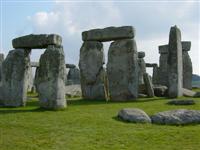
A couple days ago, a group of NeoPagans and others looking for either natural beauty or revelry joined at Stonehenge to celebrate the summer solstice. The Associated Press report about it has been picked up by CNN, Forbes, and the LA Times. BBC News also reported it. Photos of the event are available on the Festival Eye and BBC websites.

For centuries, in ancient times, spiritual darkness covered the British Isles, but the Creator sent His servants into pagan lands to dispel the darkness, enlighten the people with the light of the Holy Gospel, and bring them back to Him.

Patricus, son of Calpornius, was born in Roman Britain. At the young age of sixteen he was kidnapped by Irish raiders and taken to Ireland as a slave. Years after his escape and return home to Britain, God sent him back to take the Truth to his former captors. He is today known as St. Patrick, Enlightener of Ireland.

St. Patrick tells his life story in his Confessions. He begins his story with these words:


I, Patrick, a sinner, a most simple countryman, the least of all the faithful and most contemptible to many, had for a father the deacon Calpurnius, son of the late Potitus, a priest, of the settlement [vicus] of Bannavem Taburniae; he had a small villa nearby where I was taken captive. I was at that time about sixteen years of age. I did not, indeed, know the true God; and I was taken into captivity in Ireland with many thousands of people, according to our deserts, for quite drawn away from God, we did not keep his precepts, nor were we obedient to our priests who used to remind us of our salvation. And the Lord brought down on us the fury of his being and scattered us among many nations, even to the ends of the earth, where I, in my smallness, am now to be found among foreigners.

And there the Lord opened my mind to an awareness of my unbelief, in order that, even so late, I might remember my transgressions and turn with all my heart to the Lord my God, who had regard for my insignificance and pitied my youth and ignorance. And he watched over me before I knew him, and before I learned sense or even distinguished between good and evil, and he protected me, and consoled me as a father would his son.

St. Columba of Iona, a Celtic native of Ireland, took the Faith to Scotland and established a monastery on the island of Iona, off the Scottish coast. St. Columba declared, "My Druid is Christ, the Son of God, Christ, Son of Mary, the Great Abbot, The Father, the Son, and the Holy Spirit."

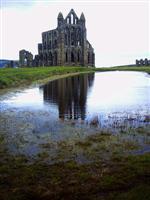
You can read about St. Patrick and St. Columba of Iona on the Greek Orthodox Archdiocese of Australia websites. Father Lester Michael Bundy has written a paper entitled St. Columba: Fact and Fiction. The complete Confession of St. Patrick is available in the Christian Classics Ethereal Library. OrthodoxWiki contains good entries on St. Patrick, St. Hilda of Whitby, St Aidan of Lindisfarne, St. Bede the Venerable, and St. Edward the Martyr, King of England.

Jesus Christ only founded one Church, His Church. All of the beloved Saints mentioned here lived in the British Isles when all Christians in both the East and West belonged to the Orthodox Christian Church. The Patriarch (Bishop) of Rome, who shared a brotherly equality with the other Orthodox Christian Patriarchs throughout the Eastern world (including Jerusalem, Antioch, Alexandria, and Constantinople), was responsible for the spiritual care of the Christians in the West.

In about AD 1054, the Roman Patriarch of the Orthodox Church, claiming to be superior to the other Patriarchs and allowing the Faith handed down since the Apostles to be compromised, separated his Patriarchate from the Orthodox Church and formed what is known today as the Roman Catholic Church, taking the Western lands under its care with him. While some writings refer to the Pope and the Roman Catholic Church during the early periods of Christianity in the British Isles, Roman Catholicism didn't even exist in those days. Many Orthodox Christian Celtic and Anglo-Saxon Saints, such as Patrick of Ireland, Columba of Iona, David of Wales, Jarlath of Tuam, Aidan of Lindisfarne, Winefride of Holywell, Augustine of Canterbury, Hilda of Whitby, and Kevin of Glendalough, lived centuries before the break between East and West that led to the formation of the papacy and the Roman Catholic Church. The famous Book of Kells was created within the Orthodox Church by the hands of her Celtic monks long before the Celtic Christians were separated from their native Church.

Although AD 1054 is often considered the date of the Great Schism, the split between East and West, Orthodox Christianity actually continued in England a few more years until the Norman Invasion by William the Conqueror (a.k.a. William the Bastard) in AD 1066. William's conquest of England placed the country under the authority of the Roman Catholic Papacy. King Edward II (the Confessor), the next-to-last English king to reign prior to the Norman Invasion, is counted among the Saints of the Orthodox Church.*

The Church of England (or Anglican Church) began about 500 years later when King Henry VIII asserted his authority over the English churches in defiance of the Pope of Rome. In 1534, according to the king's wish, Parliament officially declared Henry VIII the head of the Church of England, completing the break with the Roman Catholic Church.

In the past few years several priests and laity within the Anglican Church have been returning to the Orthodox Christian Church, reconnecting with their spiritual roots. One such person is Timothy Ware, who was born in England, reared Anglican, studied at Oxford University as a student and also served as a professor at Oxford until his retirement. He is now a bishop in the Orthodox Church with the name Bishop Kallistos of Diokleia. As the articles in The Guardian and on the Orthodox England website seem to indicate, His Royal Highness, Charles, Prince of Wales may also be on his way to the spiritual home of the English people, the Orthodox Christian Church. Thank God. May they keep coming home and may God grant those who have returned many years!

*Read the manuscript of a lecture given by Bishop Kallistos at Westminster Abbey about St. Edward the Confessor.

Copyright © 2006 by Dana S. Kees. (The photos are in the public domain. They include Stonehenge, St. Columba's Bay, where St. Columba is said to have landed at Iona, and Whitby Abbey, founded by St. Hilda. The original public domain photos are from Wikipedia and/or OrthodoxWiki.)

Wednesday, June 21, 2006

The Beauty of a Holy Place

Nearly one thousand years ago, Vladimir, the Grand Prince of Russia, began looking for a religious faith suitable for his people. The ruthless pagan leader intended to find a spiritual way of life better than the traditional paganism of his land. Vladimir received visitors from different cultures with whom he enthusiastically discussed the religions of their native countries. He also sent emissaries abroad on a search for the right path for his people to follow. Both the Grand Prince and his traveling ambassadors remained unimpressed with the religions they encountered until they arrived at Constantinople, the legendary capital of the Christian Byzantine Empire. In the imperial city, Vladimir’s emissaries entered the renowned Church of Holy Wisdom to see how Orthodox Christians worship. When they had experienced the glorious beauty of the Divine Liturgy, they walked out of the church in a state of inexpressible awe. They returned home and reported to their Prince what they had encountered in the great church: “We don’t know whether we were in heaven or on earth for surely no such radiant beauty exists upon the earth. We can’t even describe it to you, but we do know that God dwells there among men and that their worship service is superior to those found in all other places. The beauty is unforgettable.”

Vladimir, whose grandmother, Olga, had become a Christian years earlier, sincerely embraced the Christian Faith and was baptized in AD 989, an event that changed his own life and led the whole Russian nation to Christ and His Church.

The Orthodox Christian way of life was born in the first century when our Lord, Jesus Christ, the human embodiment of Divine Beauty, came into the world and established His Church. For several centuries after Christ's death, burial, resurrection, and ascension into heaven, the Church worshipped in secret during several periods of intense persecution. Eventually, the (Roman) Empire that killed the Martyrs was conquered by their Faith. In the fourth century, under the leadership of the Emperor Constantine the Great and his devout mother, Helena, the once persecuted Orthodox Christian Church was raised up out of persecution to become the official Church of the new Roman Empire, called the Christian Byzantine Empire. For the first time, the Church once forced to worship in secret was able to build magnificent temples (church buildings) where they could worship the One True and Living God: Father, Son, and Holy Spirit. God is supremely beautiful and the heavenly reality where God dwells is filled with His glory. Therefore, Orthodox Christian temples, adorned with polished marble and dazzling gold with intricate mosaics and richly painted icons covering the interior walls, were constructed to reflect the heavenly glory of God.

The Orthodox Church continues the tradition of building beautiful temples, holy places where heaven and earth meet. What makes these church buildings temples is that God dwells there, in the place where His Church gathers together for worship and prayer. (Although these buildings are commonly called churches, the word Church, literally meaning "assembly," actually describes the Christian community gathered inside.) God is always present with His Church, wherever she may be.

The interior of the Orthodox Christian temple is a reflection of heaven itself. The architecture doesn’t just symbolically represent heaven, but the temple is a physical place where the invisible heavenly reality is actually present with us on earth. This is a great mystery.

What does the invisible heavenly reality look like? This is what the Prophet Isaiah saw when God opened his eyes to the beauty of heaven:

In the year of King Uzziah’s death I saw the Lord sitting on a throne, lofty and exalted, with the train of His robe filling the temple. Seraphim stood above Him, each having six wings: with two he covered his face, and with two he covered his feet, and with two he flew. And one called out to another and said,

“Holy, Holy, Holy, is the LORD of hosts, The whole earth is full of His glory.”

And the foundations of the thresholds trembled at the voice of him who called out, while the temple was filling with smoke. (Isaiah 6.1-8, NASB)

St. John was also shown the beauty of heavenly worship:

The four living creatures, each having six wings, were full of eyes around and within. And they do not rest day or night, saying:


Holy, holy, holy
Lord God Almighty,
Who was and is and is to come!

Whenever the living creatures give glory and honor and thanks to Him who sits on the throne, who lives forever and ever, the twenty-four elders fall down before Him who sits on the throne and worship Him who lives forever and ever, and cast their crowns before the throne, saying:

You are worthy, O Lord,
To receive glory
and honor and power;
For you created all things,
And by Your will they
exist and were created. (Revelation 4.8-11, NKJV)

The worship of the Orthodox Christian Church is heavenly worship. When we gather together in our temples for prayer, the whole Church, including both saints in heaven and those on earth, is mystically present as one body. Those of us who are daily running the race on earth are cheered on by our spiritual fathers, mothers, brothers, and sisters who have completed this earthly life and now stand in the eternal glory of God. We are not alone. The great cloud of witnesses in heaven, including prophets, apostles, evangelists, martyrs, confessors, and all of Christ’s saints, surround us. The angels, archangels, cherubim, and seraphim are also there. Our churches are filled with holy icons, windows to heaven, that constantly remind us of the spiritual realty all around.

The Divine Liturgy, celebrated every Sunday morning in Orthodox Christian temples around the world, is the central service of worship for the Orthodox Christian Church, gathered together in prayer. Upon entering the church before the Divine Liturgy begins, you may find that a service of morning prayer is already in motion. The melodious sound of chanted ancient prayers and the smell of incense pervade the sacred place. The end of this prayer service, called Orthros or Matins, seamlessly flows into the beginning of the Divine Liturgy, which begins when the priest lifts up the Holy Gospels resting upon the altar, makes the sign of the cross with the book, and proclaims, “Blessed is the kingdom of the Father, and of the Son, and of the Holy Spirit, both now and ever, and unto ages of ages!”

Like most of our services, the Divine Liturgy is mostly sung, involving a constant dialogue of prayer between the priest and the people, led by the choir and chanters. Some people pray aloud; others listen attentively and pray in silence with their hearts.

With the angels, we sing the thrice-holy hymn:

Holy God, Holy Mighty, Holy Immortal: have mercy on us.

Glory to the Father, and to the Son, and to the Holy Spirit:
Both now and ever, and unto ages of ages. Amen.

and sing the glorious Cherubic Hymn:

We who mystically represent the cherubim
and who sing the thrice holy hymn
to the life-creating Trinity
now lay aside all earthly cares that we may
receive the King of All
Who comes invisibly upborne by the angelic hosts.

Receiving the censor, the priest, dressed in glittering vestments fit for service before the King of Creation, prays as he censes the holy altar, the sanctuary, the icons, and also the people, because we bear the image of God within us. The sweet smell of the incense fills the temple, reminding us that God is immediately present in our midst. The rising white smoke, mingling with our prayers, brings to mind what St. John saw in his vision of heaven:

Then another angel, having a golden censer, came and stood at the altar. He was given much incense, that he should offer it with the prayers of all the saints upon the golden altar which was before the throne. And the smoke of the incense, with the prayers of the saints, ascended before God from the angel’s hand. (8.3-4, NKJV)

Much more beauty exists in the Divine Liturgy than what I've described here. This reveals only a tiny glimpse of the heavenly reality present among us on earth. It’s something that must be experienced.

The temple where we gather together is beautiful and our spiritual worship, both ancient and timeless, is beautiful. The word Orthodox has a double meaning: right belief and right worship (or right glory). We believe the true Faith, having preserved what we have received since the time of the Apostles, and we worship the True and Living God in the manner He should be worshipped, in glorious splendor. This is the way of the Orthodox Christian Church, the way of divine beauty, the way of becoming beautiful with the radiance of divine beauty. In a broken, spoiled world where people desperately need real beauty in their lives, may we turn away from everything that corrupts the soul so that the divine beauty may shine within us, allowing the world to see through us the indescribably brilliant, enlightening beauty of our all-holy, ever-loving God.

“One thing have I asked of the LORD, that will I seek after; that I may dwell in the house of the LORD all the days of my life, to behold the beauty of the LORD, and to inquire in his temple” - Psalm 27.4 (RSV)


This article is the third part of a trilogy on The Beautiful Life. The other articles include Natural Beauty and The Secret of Being Beautiful.


Copyright © 2006 by Dana S. Kees. (The photo of St. Mary Magdalene Russian Orthodox Church, located on the Mount of Olives in Jerusalem, is from the Pictorial Library of Bible Lands, Bibleplaces.com. Used by permission.)